This weekend in Richmond, I had the honor of giving a podium presentation at the Cogan Ophthalmic History Society (COHS) 38th Annual Meeting—a gathering that reminds all of us why medical history matters so deeply: it sharpens how we think, widens how we see, and keeps us grounded in the human stories behind our science.
COHS was founded in 1988, inspired by David Glendenning Cogan (1908–1993)—a legendary ophthalmologist, researcher, and mentor who believed that understanding the roots of our specialty makes us better clinicians and better colleagues. The Society’s mission is refreshingly clear: to provide a scholarly forum for presenting and discussing research on the history of ophthalmology and allied fields, with a spirit of curiosity and collegial debate. Over the years, that mission has translated into meetings that are both rigorous and genuinely joyful for anyone who loves learning.
This year’s program captured the Society’s range perfectly. In a single weekend, we moved from big questions—like the ethics of medical eponyms and the history of iatrogenic disorders to stories that were unexpectedly personal, cultural, and even playful. Talks explored the evolution of retinal laser therapies, tele-ophthalmology across decades, women’s leadership and growth in the field, and wide-ranging narratives that connected ophthalmology to politics, art, patents, and public health. (Yes—there was even a talk on Disney history for the ophthalmologist, which delighted the entire room.)
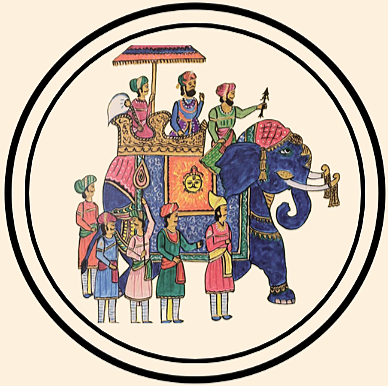
My presentation was titled: “The Political Eye: Ophthalmic Trauma as Statecraft in the Timurid‑Mughal Dynasty.” I examined a difficult but revealing historical practice: the blinding of dynastic rivals as a form of political strategy. Under the Chaghatai legal code, a foundational principle held that a blind man could not rule—which meant ocular trauma could be used not only as punishment, but as a calculated tool of succession politics.
I traced what I called a “trajectory of trauma” through three pivotal episodes—1553, 1719, and 1788—and argued that the method of blinding mirrored the stability of the state itself. At the height of imperial order, accounts describe a striking “sterile intent”: a lancet used with precision at the limbus, followed by lemon juice and salt to induce corneal opacity. As imperial norms frayed, the technique shifted toward hot needles and wire, and finally—during the empire’s collapse—devolved into brutal enucleation by dagger, with no medical pretense remaining.
Presenting this work at COHS felt especially meaningful because the Society encourages us to look beyond timelines and textbooks—to consider how medicine intersects with law, power, ethics, and culture. I’m grateful for the thoughtful questions and the chance to learn from colleagues who make history feel vividly alive.
